
Global Affairs Canada
Global Trade Commissioner Training Program
Client
Global Affairs Canada is the lead department of the Government of Canada responsible for the country’s diplomatic and consular relations, international trade, and humanitarian and development assistance. Operating under the legal framework of the Department of Foreign Affairs, Trade and Development Act, GAC serves as Canada’s face and voice on the world stage, managing a global network of over 175 offices and missions across more than 100 countries.
Process
A key part of its mandate is promoting rules-based international trade, attracting foreign direct investment, and helping Canadian firms navigate global supply chains and trade regulations.
Canada has made a national priority of increasing support for Canadian businesses, ensuring they take advantage of the opportunities of free trade agreements (FTAs) the country has signed. The Canadian Trade Commissioner Service has offices in 161 locations around the world. Trade commissioners offer numerous programs and services to help Canadian businesses pursue partnerships and commercialization opportunities in new markets, and offer financial support and practical advice to help conduct international business – free of charge.
The challenge is that free trade agreements are enormous. The documentation for each runs in the thousands of pages, full of conditions and exceptions. But the potential advantages for companies are also enormous, if they can be understood and leveraged. This creates a pressing need for Global Affairs to educate trade commissioners on FTA commitments and explain their benefits, as well as the resources and experts that exist to support them.
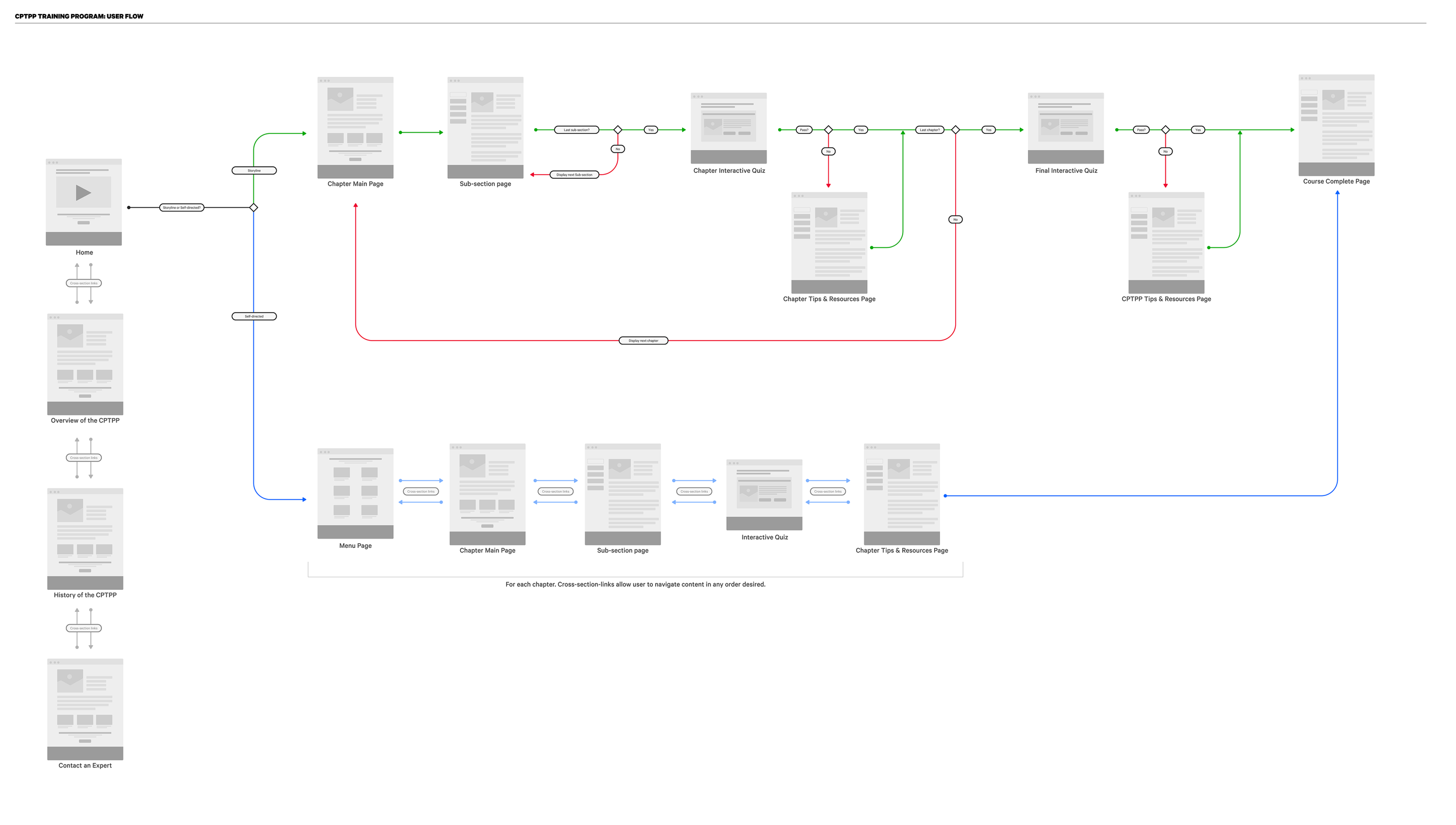
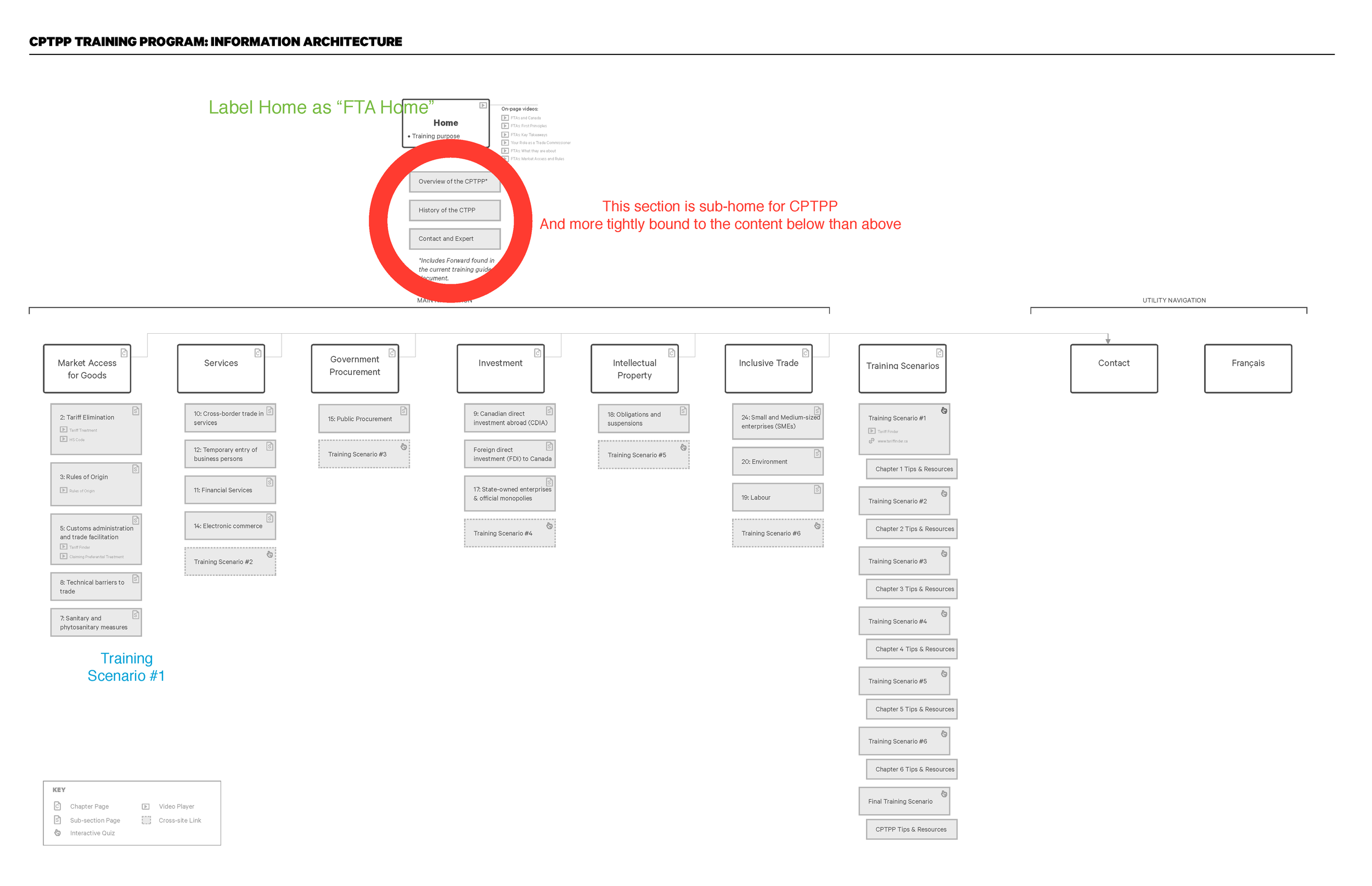
Traditional in-person, classroom-style workshops were geographically limiting and inefficient for broad-scale training, so senior leadership asked for a more accessible, online solution to train both new and experienced staff. Our process began by actually attending the in-person training sessions that we would be recreating online. Armed with not only the content, but the educational context and understanding, we developed a comprehensive project plan, setting out deliverables and proposed timelines. We selected a learning platform Information Architecture: Within three weeks, Herald proposed a clear information architecture, outlining the framework for the learning environment.

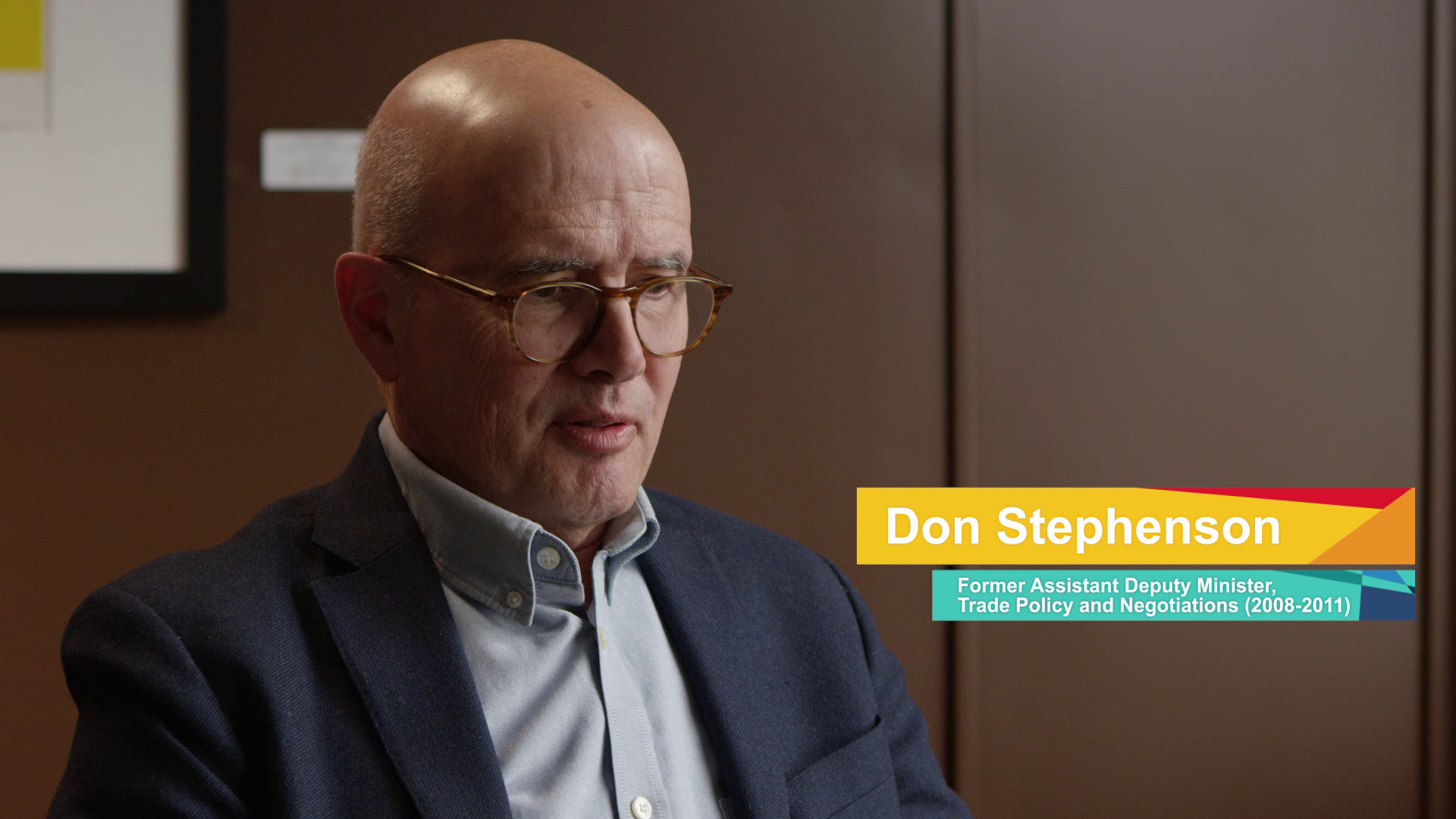
“Canada is a country that needs trade. We have a modern industrial economy, bountiful resources, and a small domestic market.””
Project
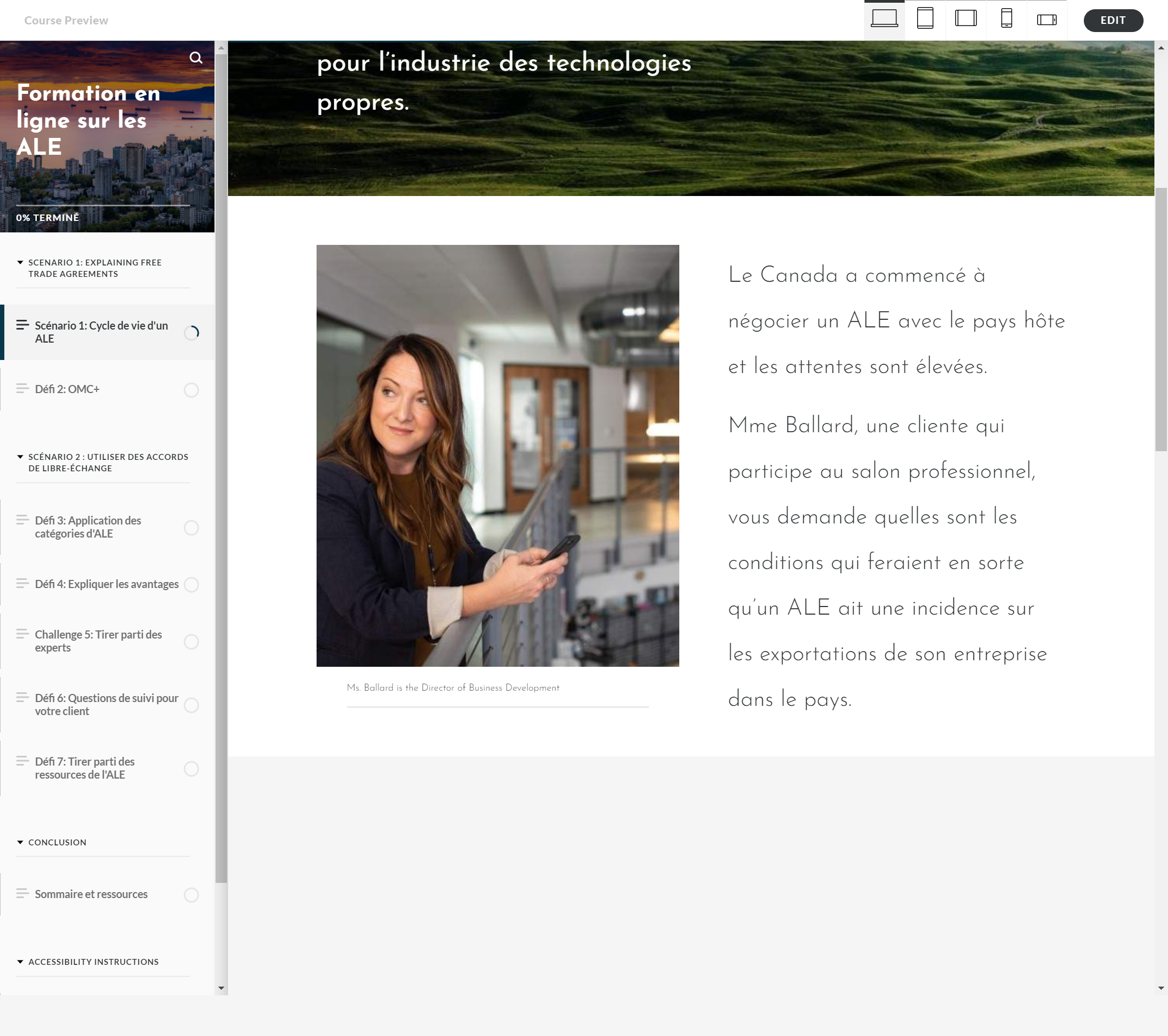
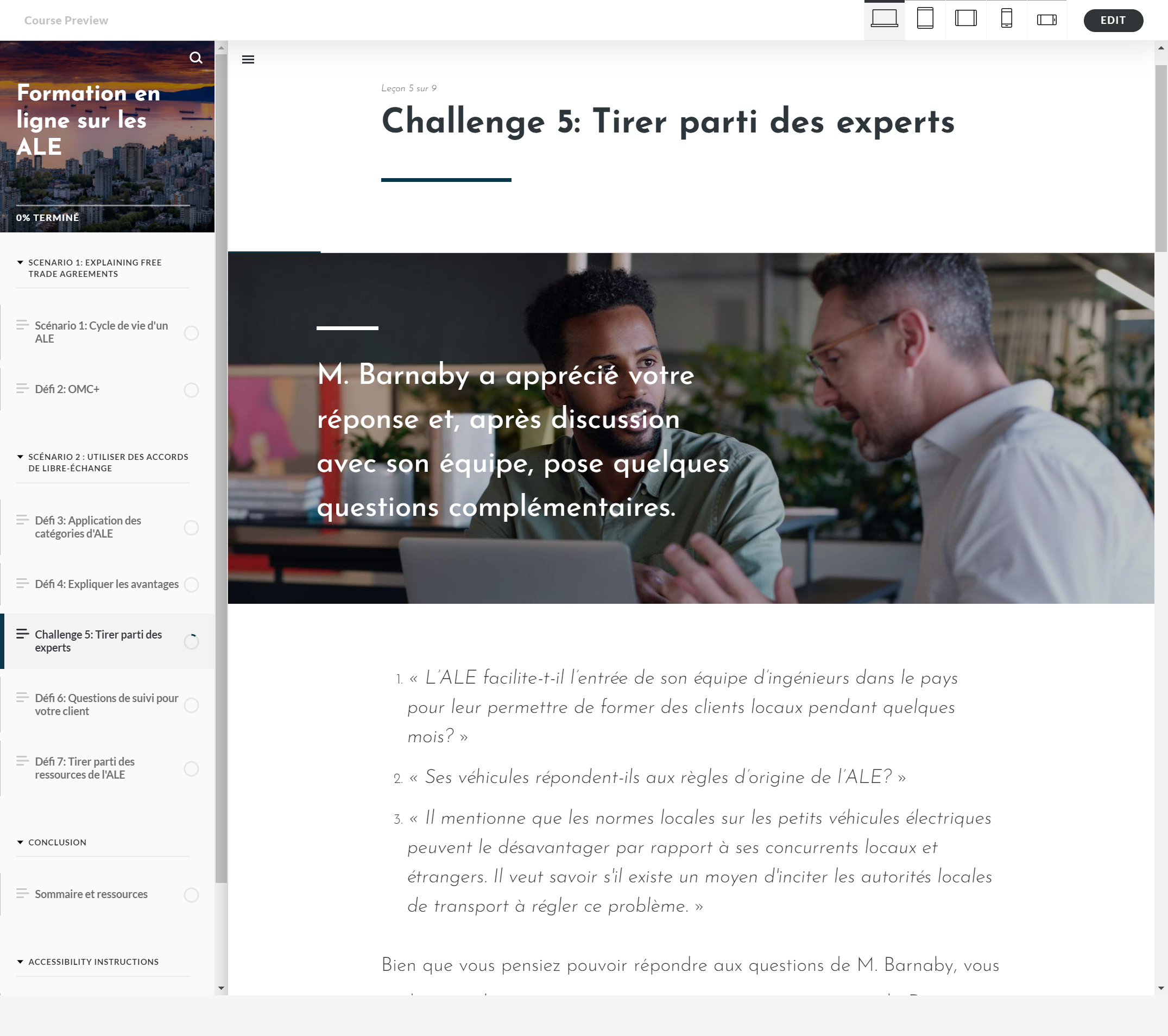
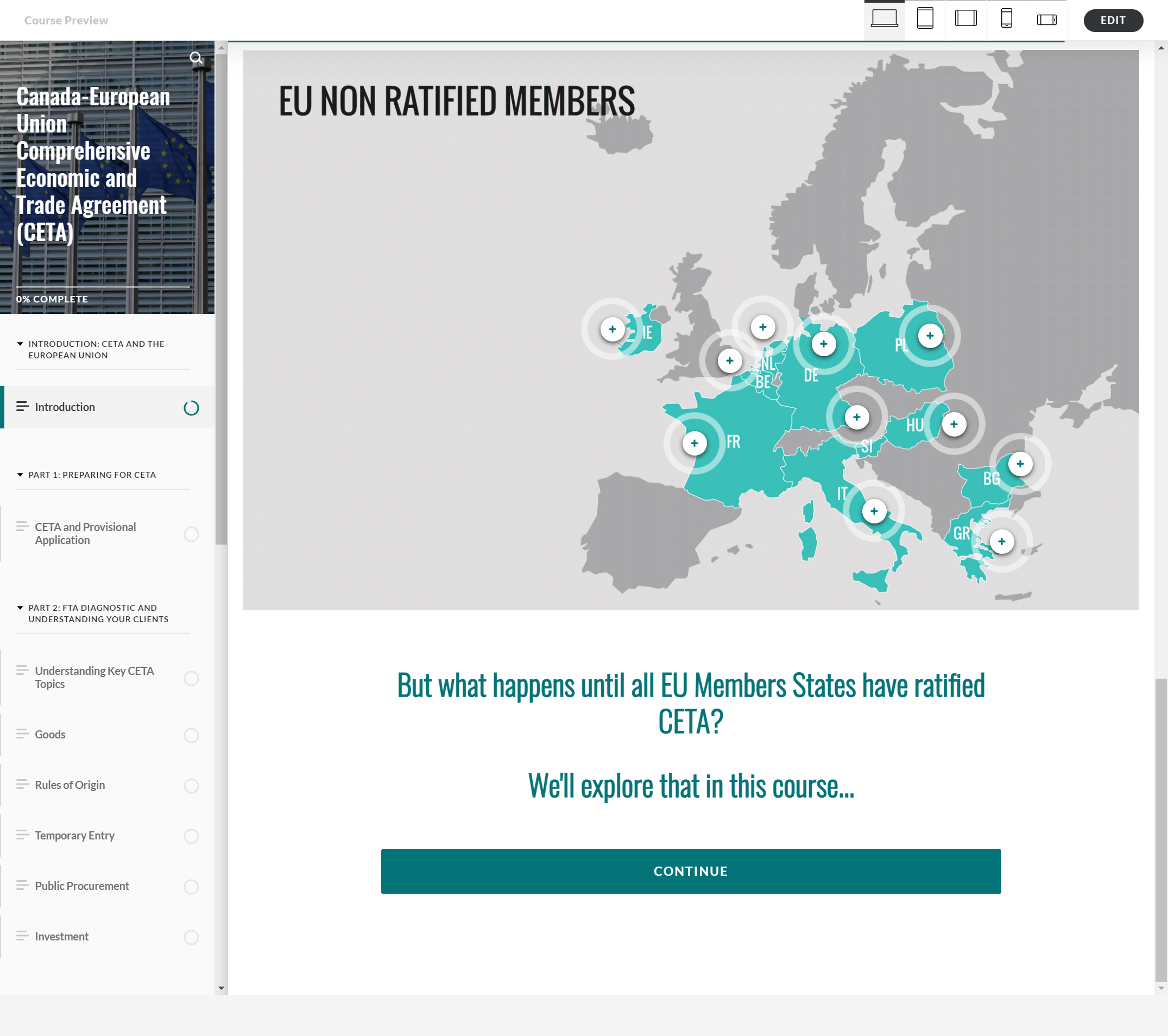
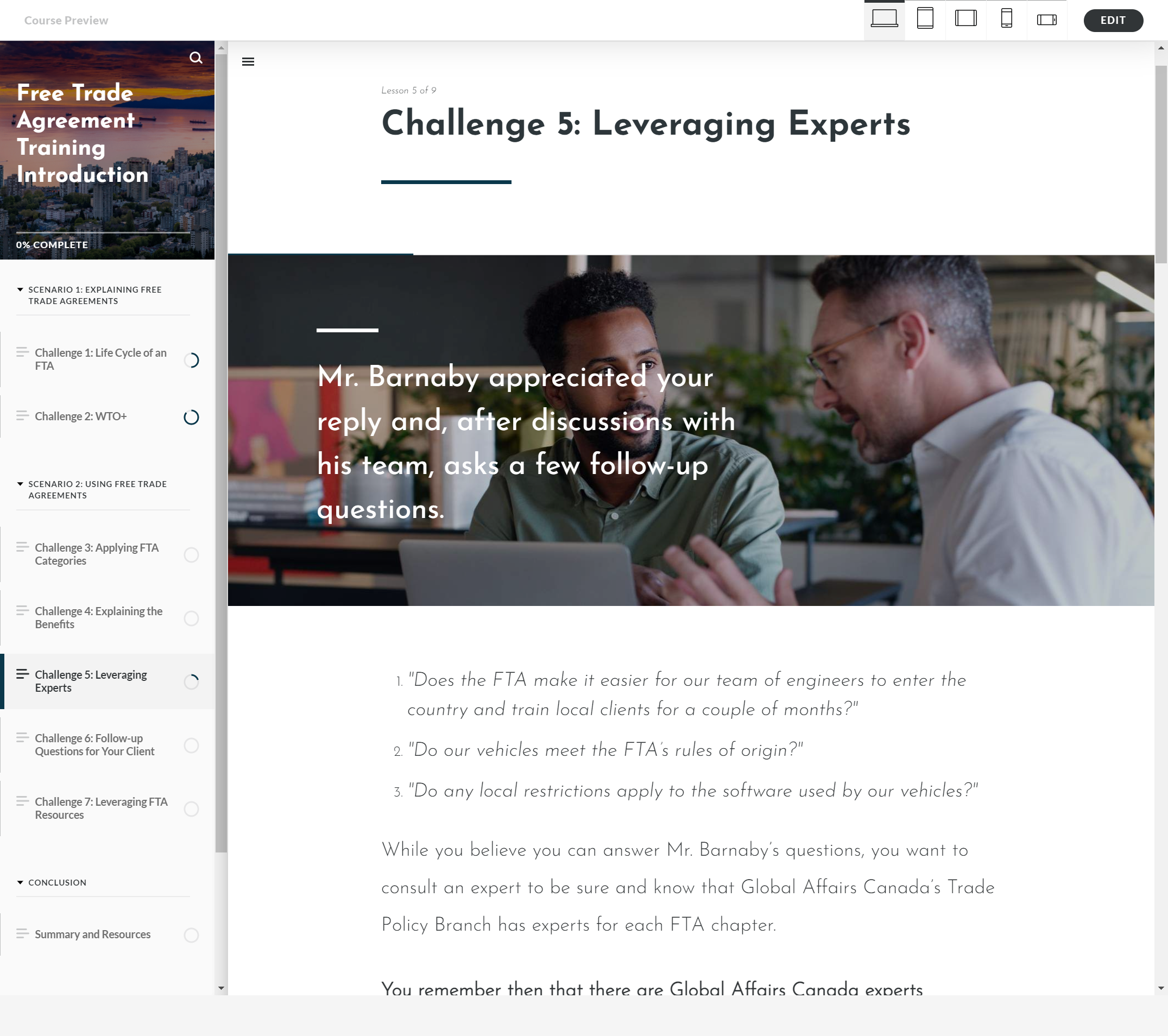
Herald was contracted to develop a modern, virtual learning Component on FTAs, delivered in both English and French. This solution aimed to move beyond basic information delivery to provide an interactive environment where TCs could research and problem-solve real-world trade policy situations. The program's primary target was TCs to enhance Trade Commissioner Service (TCS) delivery, but it was made available to all Global Affairs employees.
Requirements
Communicate data that demonstrates the importance of the Asia-Pacific region to Canada`s economy.
Explain the benefits of the CPTPP for Canadian businesses, especially small and medium-sized businesses.
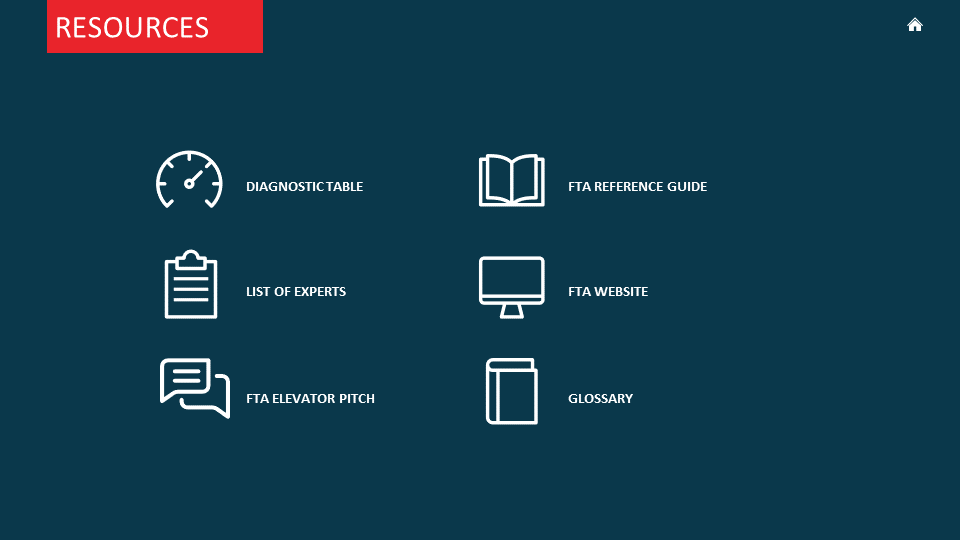
Access tools and resources that help them leverage the benefits of the agreement when conducting their role in Canada’s Trade Commissioner Service (TCS).
The course must be compliant with SCORM 1.2 guidelines
The course must be developed in accordance with WCAG 2.0 accessibility guidelines.
The Module was broken down into Sub-modules addressing key trade policy themes and commitments:
Market access for goods
Cross-border trade in services
Government procurement
Investment protection and attraction
Temporary entry of business persons (labour mobility)
Inclusive trade
Each Sub-module included an embedded assessment with up to eight (8) questions designed to test user knowledge. Although user completion did not rely on a score threshold, the system was programmed to require users to answer all questions across all Sub-modules to receive official credit for completing the CPTPP Module.
A crucial requirement for the solution was ensuring the Component was programmed to easily accommodate the straightforward addition of future FTA Modules upon the completion of the current contract.



Results
The result was a bilingual, interactive virtual learning Component that provided Global Affairs’ 6,000 employees with the foundational knowledge, skills, and resources needed to effectively advise clients on leveraging Canada's FTAs, successfully transitioning capacity building from a limited in-person model to an accessible, scalable online platform.
Development
Research
Messaging
Brand Identity
Brand Expressions
Online Education Platform
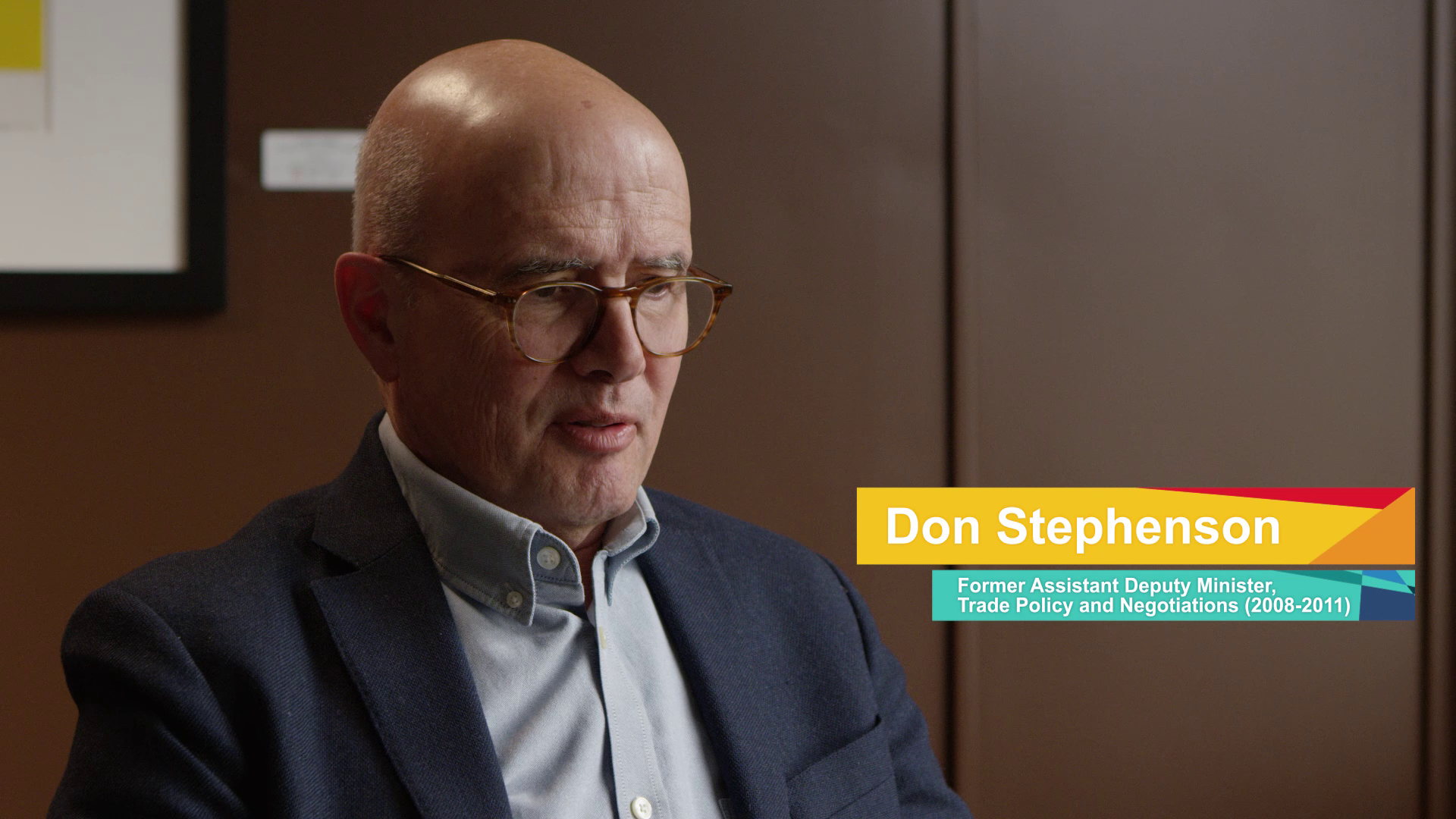
Video Series
Partners
Blacmao
Dan Rascal